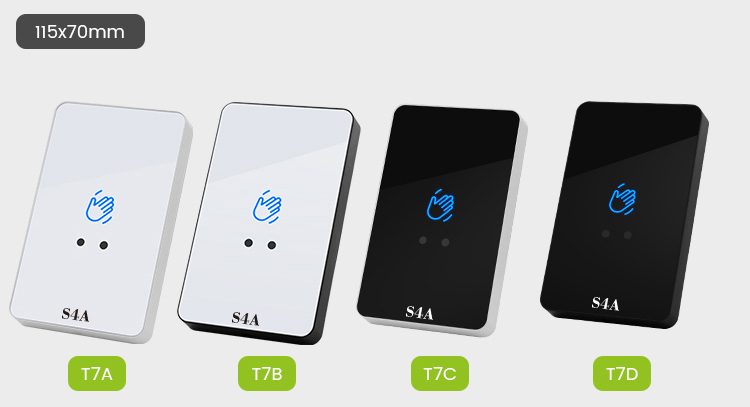
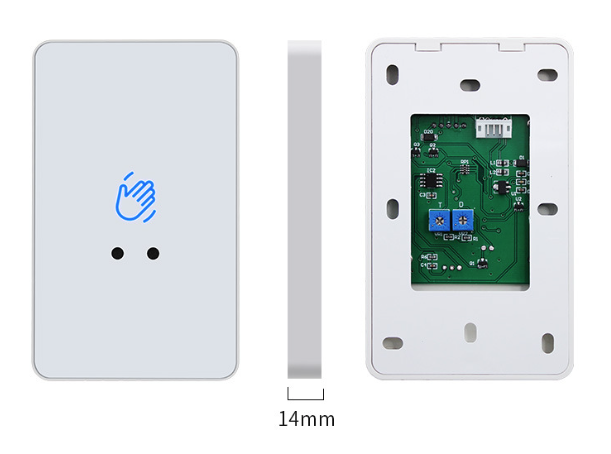
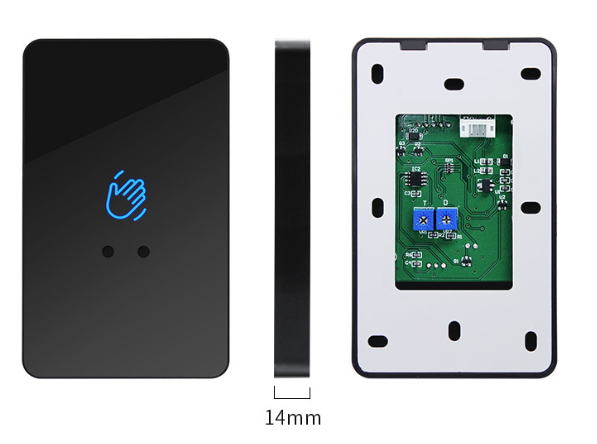
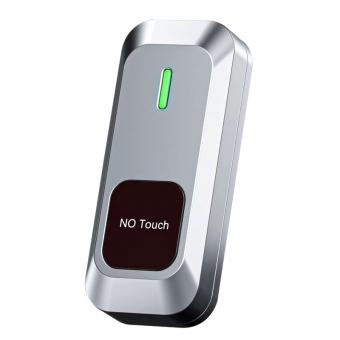
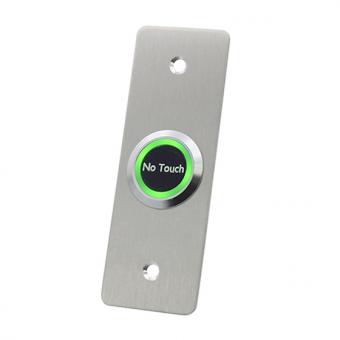
Infrared sensor touchless exit button
Model No: T7D
|
Product Parameter
|
Parameter Description
|
|
S4A Model
|
T7D
|
|
Product Name
|
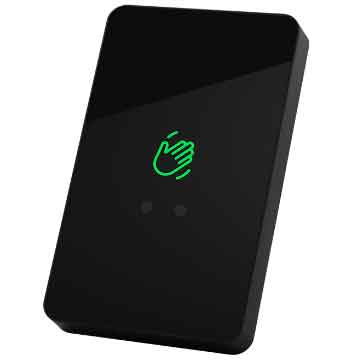
Touch Sensor Exit Button
|
|
|
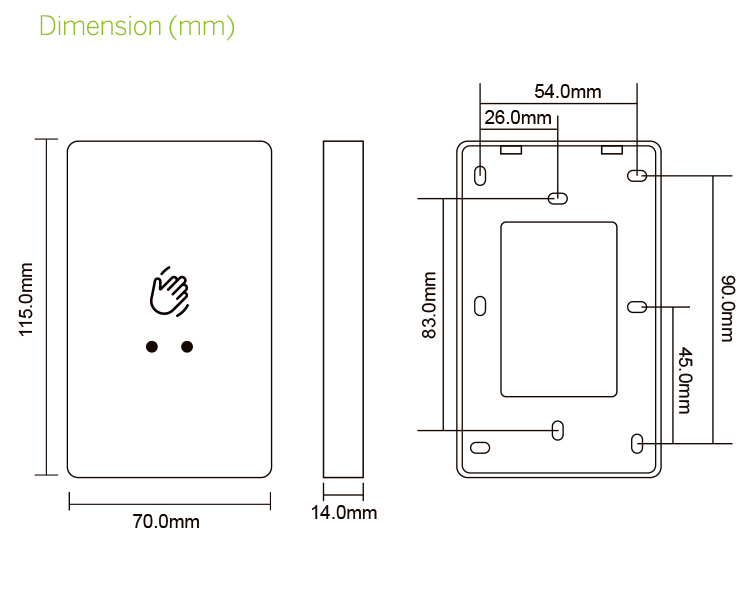
Dimensions
|
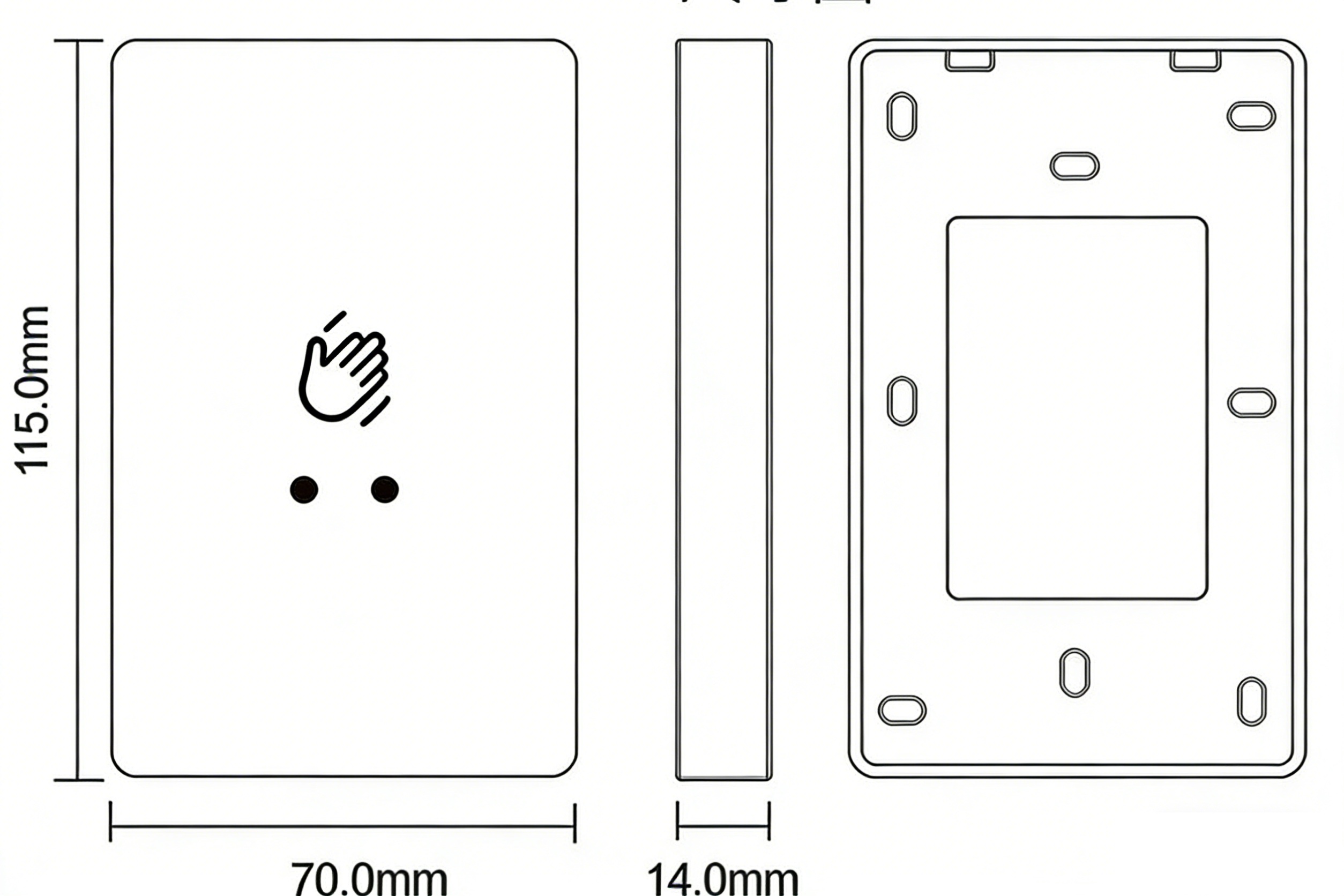
115Lx70Wx14H(mm)
|
|
Power
|
DC12V-24V
|
|
Output Contact
|
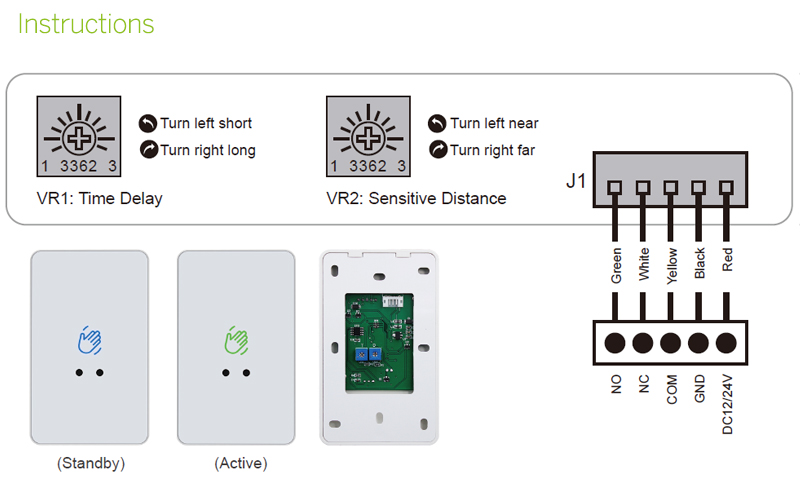
NO/NC/COM
|
|
Mounting Way
|
Surface Mount
|
|
Material
|
PC case+ABS face plate
|
|
Mechanical Life
|
500,000 Tested
|
|
LED Indicator
|
Blue LED (Standby)
|
|
Green LED (Active)
|
|
Time delay
|
0~30s(Adjustable)
|
|
Operating temp
|
-20℃~+55℃(14-131F)
|
|
Suitable Humidity
|
0-95% (relative humidity)
|
|
|
Unit Weight
|
0.094KG
|
|
Standard Package
|
100PCS/carton
|
|
Carton Weight
|
10KG
|
|
Carton Size
|
51*43*33(cm)
|
How Does the S4A Infrared Sensor Avoid False Triggers Caused by Environmental Factors? And What Is the Effective Sensing Distance of the Touchless Exit Button?
In access control systems, infrared sensors and touchless exit buttons are core components ensuring stable and intelligent operation. Their anti-interference performance and sensing accuracy directly affect the user experience and system reliability. Here is a detailed explanation of the technical principles and key parameters:
I. Anti-False Trigger Technology of Infrared Sensors Against Environmental Interferences
To address false triggers caused by sunlight, temperature fluctuations, dust, flying insects, and other factors, our infrared sensors adopt a multi-dimensional technical design:
The Dual-Beam Infrared Detection Principle sensor uses a dual-beam emission and reception structure instead of a single-beam design. It emits two infrared signals with specific frequency bands and only triggers the alarm or sensing response when both beams are blocked simultaneously. Small objects like dust and flying insects can only block one beam at most when passing through the sensing area, so they will not trigger false actions. Meanwhile, sunlight contains scattered infrared rays, but its frequency and intensity are unstable; the dual-beam matching design can effectively filter out these disordered signals.
Adaptive Temperature Compensation AlgorithmTemperature changes will affect the sensitivity of infrared receivers by altering the ambient infrared radiation intensity. S4A sensors are equipped with a built-in high-precision temperature sensor and an adaptive compensation chip. The system real-time monitors the ambient temperature, dynamically adjusts the receiver’s sensitivity threshold, and eliminates the sensing deviation caused by temperature rise or drop. For example, in high-temperature environments in summer, the algorithm will appropriately increase the response threshold to avoid false triggers caused by thermal radiation; in low-temperature environments in winter, it will optimize the sensitivity to ensure normal detection of valid targets.
-
Optical Filtering and Narrow-Band Modulation Technology
The sensor’s receiving end is installed with a special infrared optical filter that only allows infrared rays of the preset frequency band (matching the transmitter’s frequency) to pass through. Sunlight, incandescent lamps, and other light sources emit infrared rays with mixed frequency bands, which will be filtered out by the optical filter. In addition, the transmitted infrared signal adopts narrow-band modulation technology, encoding the signal into a specific pulse sequence. The receiver can only recognize the modulated signals with matching pulse codes, completely eliminating the interference of natural light and other artificial light sources.
-
Intelligent Target Recognition and Threshold Setting
The sensor is programmed with a target feature recognition algorithm that can distinguish between valid targets (such as human hands or bodies in access control scenarios) and invalid interference objects (dust, insects). By presetting the size, moving speed, and energy characteristics of valid targets, the system automatically ignores small objects with low energy and fast moving speed. At the same time, users can adjust the sensing threshold through the access control host according to the actual application environment (e.g., adjusting to a higher threshold in dusty workshops), further reducing false trigger risks.
-
II. Effective Sensing Distance of the Touchless Exit Button
Our touchless exit button, based on infrared sensing technology, is designed to balance operational convenience and anti-interference performance, with the following key parameters:
-
Standard Effective Sensing Distance
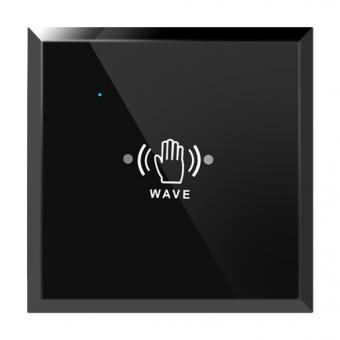
Under normal ambient conditions (temperature 25℃, humidity 40%–60%, no strong light interference), the effective sensing distance of the touchless exit button is 3–8 cm. This range ensures that users can trigger the button by waving their hands without touching the surface, avoiding cross-infection risks, and preventing false triggers caused by accidental approach of objects (such as the swing of a door panel or the passing of a paper document).
-
Adjustable Distance Function for Custom Scenarios
For special application scenarios (e.g., installation in hospitals requiring longer sensing distances for sterile operation, or installation in crowded office areas requiring shorter distances to avoid misoperation), the sensing distance can be adjusted within the range of 2–10 cm through the built-in potentiometer or the access control system’s software. The adjustment process is simple and does not require professional tools, meeting the personalized needs of different users.
-
Factors Affecting the Sensing Distance
-
Ambient Light: Strong direct sunlight or high-intensity infrared lamps may slightly reduce the effective distance (by about 1–2 cm), but the optical filtering design can minimize this impact.
-
Temperature and Humidity: In high-humidity environments (e.g., underground garages), the attenuation of infrared signals will increase slightly, but the impact on the sensing distance is within 0.5 cm.
-
Target Reflectivity: Objects with high reflectivity (e.g., human hands with dry skin) have a longer sensing distance, while objects with low reflectivity (e.g., dark gloves) may shorten the distance by about 1 cm.
Conclusion
Through the combination of dual-beam detection, temperature compensation, optical filtering, and intelligent recognition technologies, our infrared sensors can effectively resist the interference of sunlight, temperature changes, dust, flying insects, and other environmental factors, ensuring stable operation in various scenarios. The touchless exit button has a standard sensing distance of 3–8 cm with adjustable functions, providing a safe, hygienic, and convenient operation experience for access control systems.



 English
 français
 Deutsch
 русский
 italiano
 español
 português
 العربية
 Türkçe
 Tiếng Việt
 Indonesia


 IPv6 network supported