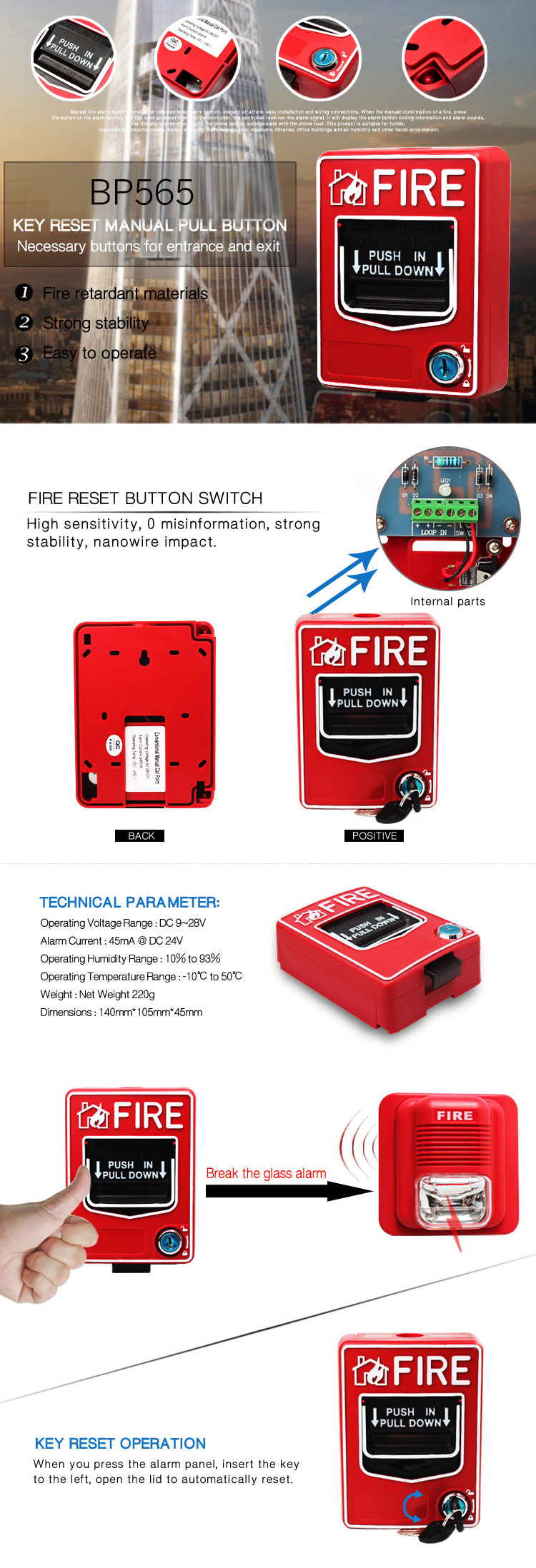
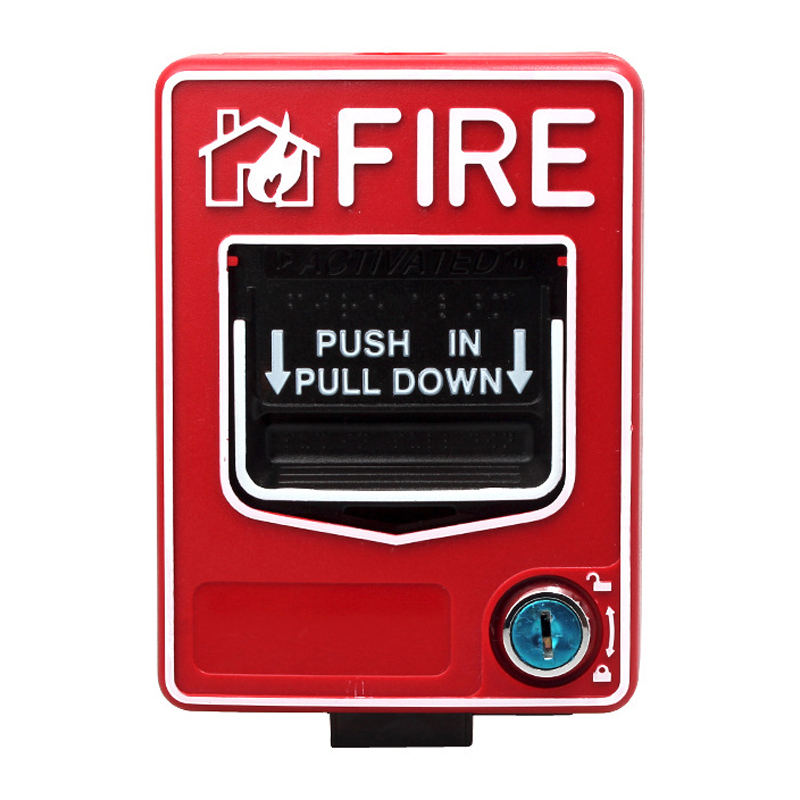
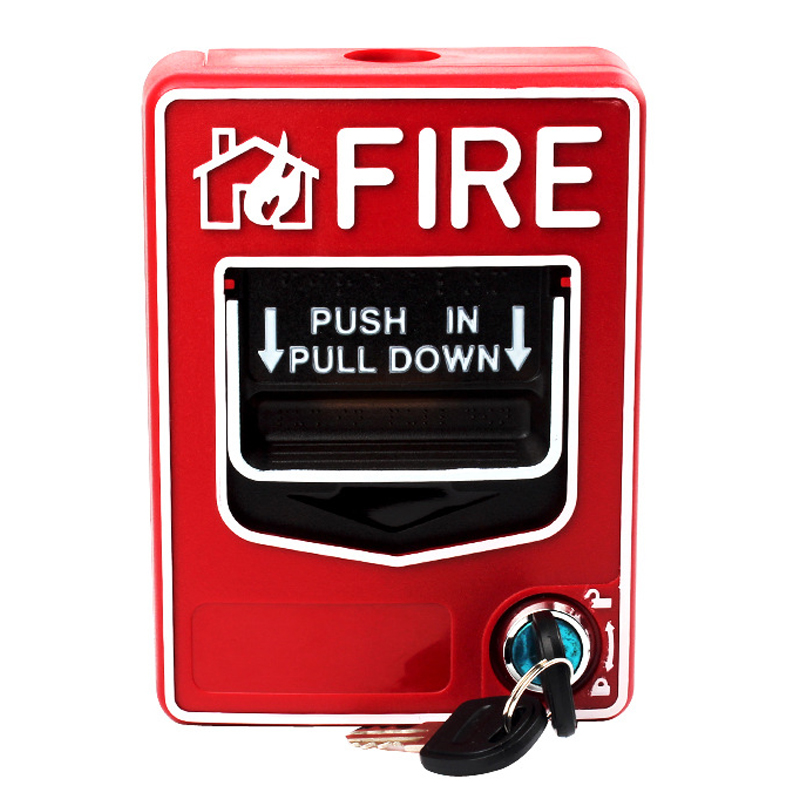
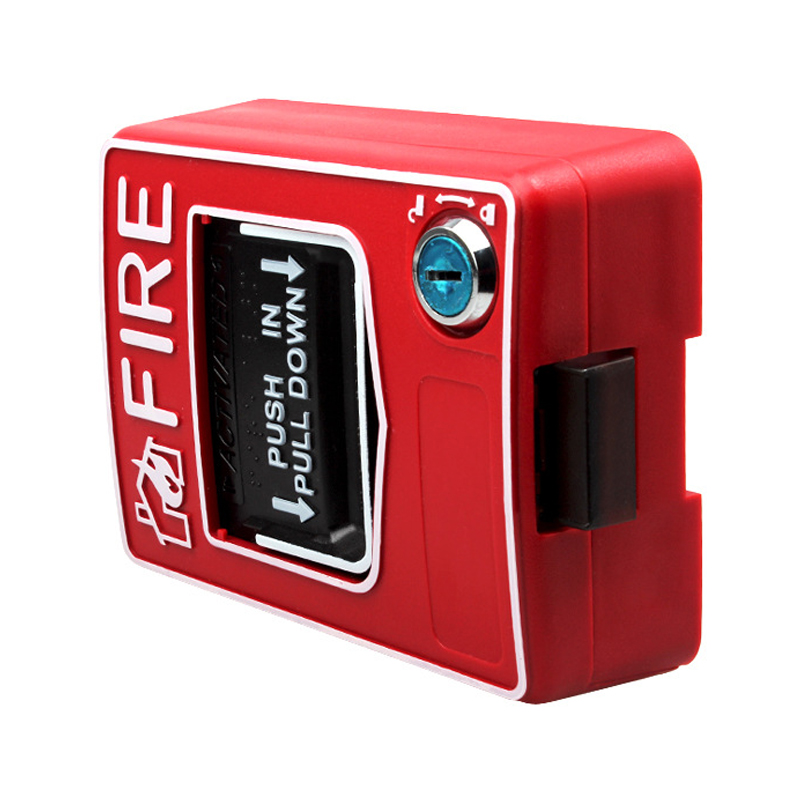
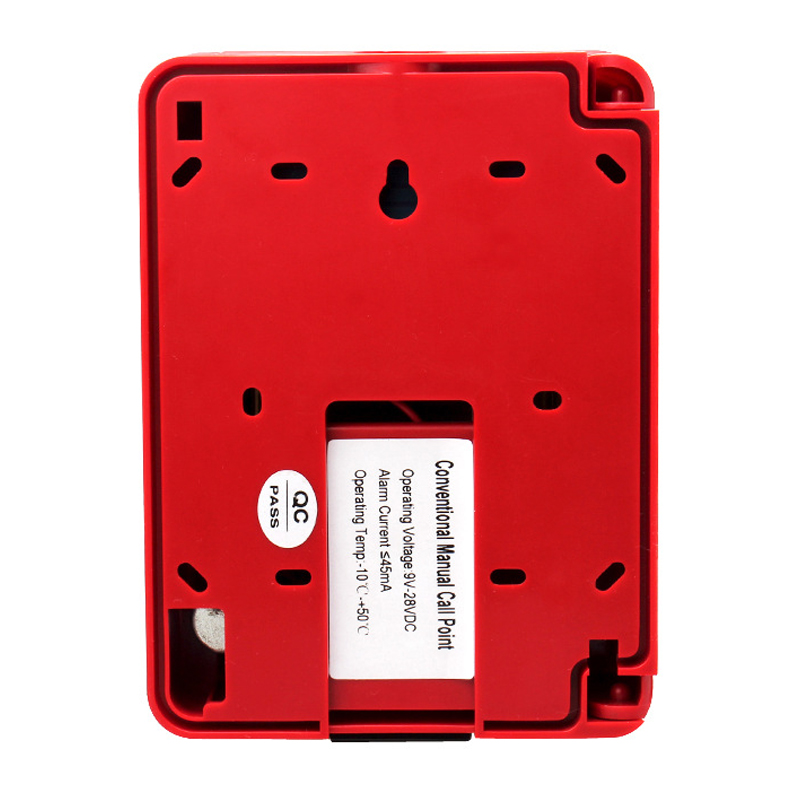
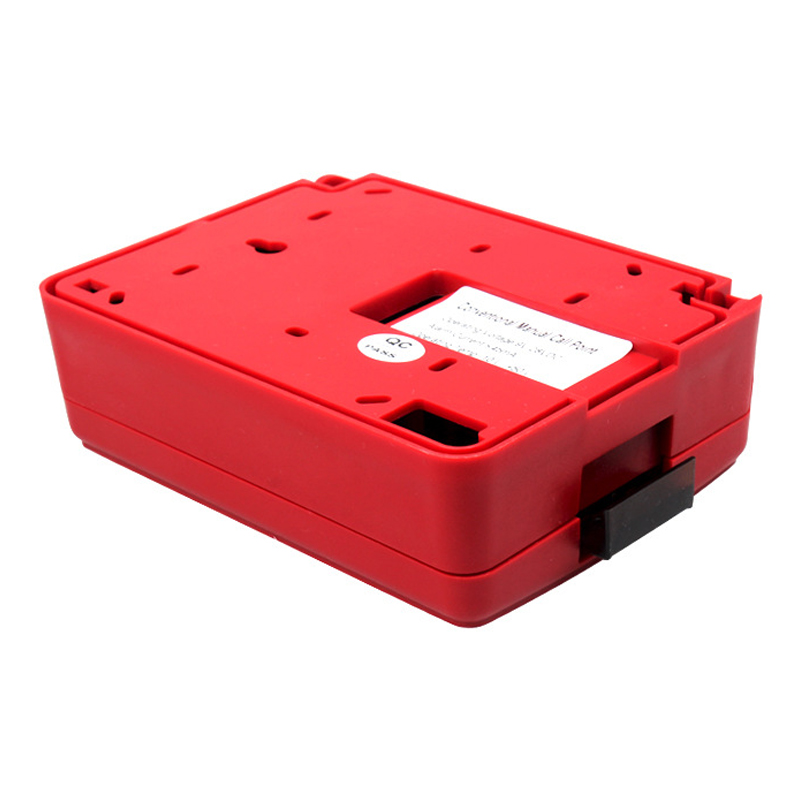
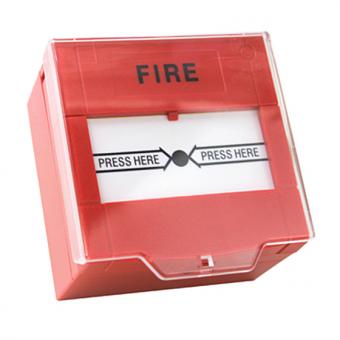
Manual call point for conventional Fire systems
Model No: BP565
|
Operating Voltage Range
|
DC9~28V
|
|
Alarm Current
|
45mA @ DC 24V
|
|
Operating Humidity Range
|
10% to 93%
|
|
Operating Temperature Range
|
-10°C to 50°C
|
|
Weight
|
Net Weight 220g
|
|
Dimensions
|
140x105x45mm
|
What is a Conventional Manual Call Point?
A conventional manual call point is a critical fire safety device designed to enable immediate human intervention in emergency situations, such as fires. Unlike addressable systems (which pinpoint exact device locations), conventional call points operate on a zone-based signaling principle. They form part of traditional fire alarm systems, where multiple devices (e.g., call points, detectors) are wired to a control panel that identifies alarms by pre-defined zones rather than individual units.
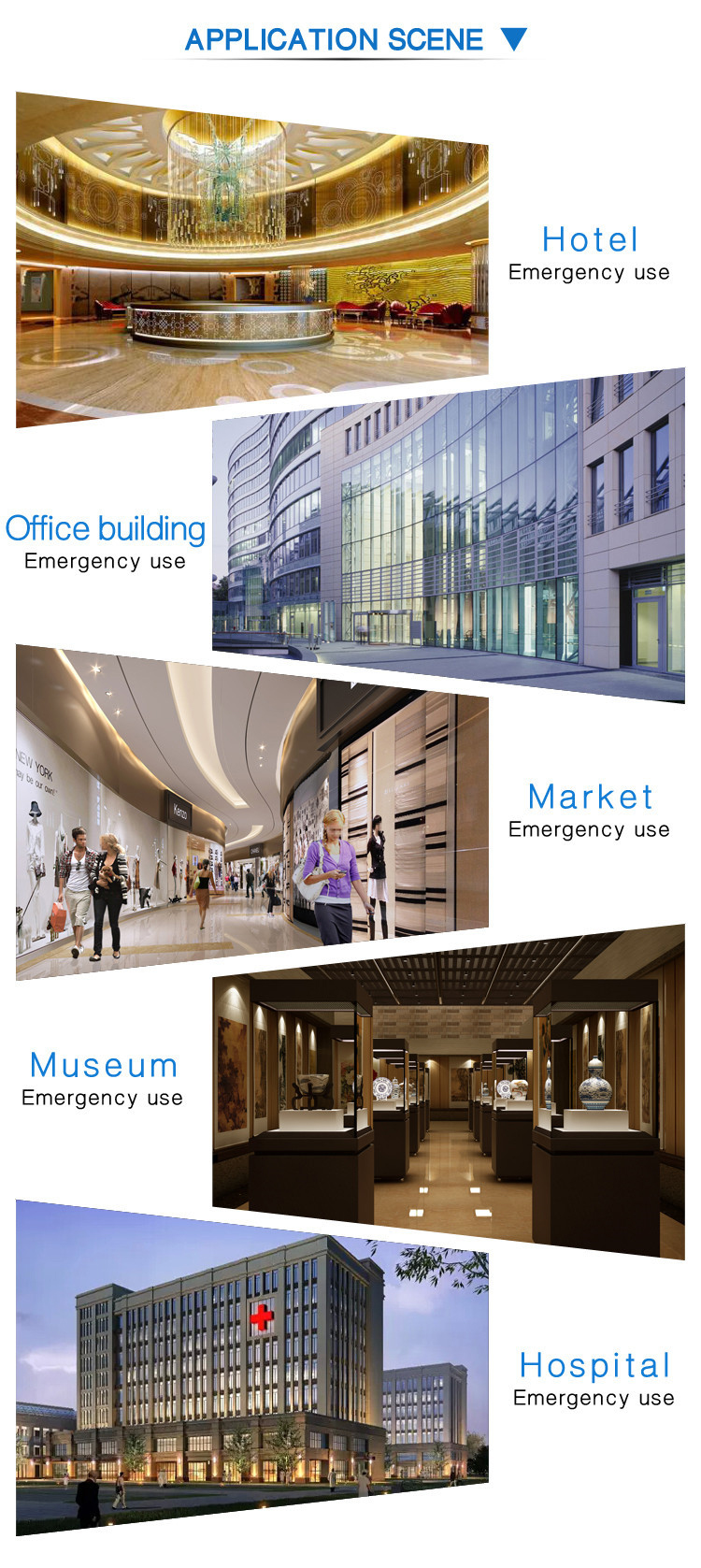
Typically installed in public, commercial, or industrial spaces, these devices feature a durable, easy-to-activate mechanism—often a pressable button or a break-glass design (though modern models may use resetable plastic covers for safety and cost-efficiency). They are built to withstand harsh environments and comply with international fire safety standards (e.g., EN 54, NFPA 72).
What Does a Conventional Manual Call Point Do?
Emergency Alarm Activation
The core function is to allow occupants to manually trigger a fire alarm. When activated (e.g., by pressing a button or breaking a cover), the call point sends a signal to the fire alarm control panel, which then activates audible alarms (buzzers, horns), visual indicators (strobe lights), and alerts to emergency services. This is crucial in scenarios where automatic detectors (e.g., smoke sensors) may not detect fires immediately, such as in areas with slow-burning materials or limited airflow.
Status Monitoring
Many models include built-in indicators (e.g., dual-color LEDs, buzzers) to show operational status:
Green light: Normal operation.
Red light: Alarm activated.
Some also offer adjustable buzzer modes (silent, intermittent, continuous) for flexibility in different environments.
System Integration
Conventional call points are wired into zone-based systems and often include electrical contacts (NO/NC/COM) to trigger auxiliary devices, such as:
Emergency lighting.
Door release systems (to facilitate evacuation).
Fire pumps or ventilation controls.
Why Should You Install a Conventional Manual Call Point?
Legal Compliance
Most jurisdictions mandate manual call points in occupied buildings. For example:
In the EU, EN 54-11 requires call points to be installed at 1.3–1.5 meters height, within 30 meters of any location in a fire compartment, and along primary exit routes.
Non-compliance can lead to fines, insurance issues, or failed safety audits. Installing these devices ensures adherence to local codes and international standards, protecting both occupants and property.
Rapid Emergency Response
Manual call points bridge the gap between early fire detection and human intervention. They allow occupants to raise an alarm immediately upon spotting a fire, even if automatic detectors haven’t yet activated. This reduces response time, enabling faster evacuation and firefighting efforts—critical for minimizing casualties and damage.
Cost-Effective Solution
Conventional systems are often more budget-friendly than addressable alternatives, making them ideal for smaller facilities or retrofits. They require simpler wiring (zonal rather than individual device cabling) and minimal maintenance. Modern models, like resetable button designs, eliminate the need to replace components after false alarms, further lowering long-term costs.
Durability and Accessibility
Built with fire-resistant materials (e.g., ABS, PC plastic), conventional call points are designed for longevity in diverse environments, from office buildings to industrial sites. Many feature:
Braille or tactile labels for accessibility.
Weatherproof casings (IP-rated for outdoor use).
Tamper-resistant designs to prevent accidental or malicious activation.
Holistic Safety Ecosystems
While standalone effective, manual call points integrate seamlessly with broader fire safety systems, such as:
Smoke detectors and heat sensors.
Public address systems for evacuation announcements.
Access control systems (e.g., automatic door unlocking during alarms).



 English
 français
 Deutsch
 русский
 italiano
 español
 português
 العربية
 Türkçe
 Tiếng Việt
 Indonesia
 IPv6 network supported